Video Testimonials: Why They Work So Well & How to Collect Them
Written testimonials can be valuable, but video testimonials bring customer stories to life in a way that written reviews can't. Learn how to collect, produce, and edit effective video testimonials in this guide.
Agnee Ghosh
October 7, 2026
Written testimonials can be great, but video testimonials simply stand out from the crowd. They put a real person behind the words and give potential customers a much better sense of what it is actually like to use a product or service.
People naturally want to know what other customers think before they make a purchase. A company can tell you how good its product is, but hearing the same thing from someone who has actually used it carries a very different kind of weight.
And that's what makes video testimonials so powerful. Video has become an established part of modern marketing, with 91% of businesses now using it as a marketing tool, according to Wyzowl's 2026 video marketing statistics.
They combine the credibility of customer feedback with the engagement of video, helping businesses show potential customers not just what they offer, but what it is actually like to use the product or service.
So, without further ado, let's look at why video testimonials are such a useful marketing tool and how you can start collecting great testimonials from your customers.
Customer testimonials can have a significant impact on how people perceive your business. Think about the last time you were considering buying something online. You probably didn't just look at what the company said about itself. You checked reviews, looked at what other customers had experienced, and tried to work out whether the product would actually deliver on its promises.
That's the power of social proof. Customers want reassurance that they're making the right decision, and hearing from someone who has already been in their position can provide exactly that. Research from BrightLocal's 2025 Local Consumer Review Survey also shows that consumers are paying attention to the detail in customer reviews, with photos and videos becoming increasingly important parts of the information people use when evaluating businesses.
Testimonials can help businesses build trust, make their brand more relatable, demonstrate different use cases, strengthen their reputation and ultimately help potential customers feel more confident about making a purchase.
Written testimonials are still valuable, but video gives customers the opportunity to tell their stories in their own words, which brings us to the next point.
Why Are Video Testimonials Such a Useful Marketing Tool?
Customer feedback has always been an important part of marketing. What's changed is the way people consume that feedback.
Video gives customers the opportunity to see and hear another person talking about their experience. Facial expressions, tone of voice and personality all add context that simply isn't possible with a written review.
Here's why video testimonials can be so effective for your business.
More Relatable and Personal
There's something different about seeing a real person talk about their experience. A written testimonial might tell you that a product saved someone time or helped them solve a problem, but a video testimonial allows that person to explain what happened in their own words.
You can hear their enthusiasm, see their reaction and understand the story behind the testimonial. That makes it easier for potential customers to imagine themselves having a similar experience.
It also means that a testimonial doesn't have to feel like traditional advertising. The customer isn't trying to sell you anything. They're simply explaining what happened to them, and that authenticity is exactly what makes customer videos so valuable.
More Engaging
Video is an easy format for people to consume, particularly when they're browsing on their phones or social media. Instead of asking someone to stop and read a long block of text, you can give them a short video that quickly communicates a customer's experience.
Of course, that doesn't mean every testimonial needs to be a highly produced five-minute film. In fact, sometimes the opposite is true.
A customer speaking naturally to their phone can feel much more authentic than something that looks as though it has been scripted, filmed in a studio and approved by ten different people. The aim is to capture a genuine experience, not create another polished advertisement.
Better Storytelling
One of the biggest advantages of video testimonials is the ability to tell a story. Numbers and statistics can be useful, but they become much more meaningful when there's a person and a story behind them. For example, saying that a product increased productivity by 30% is interesting. Having a customer explain what their business was struggling with before they found the product, why they decided to try it and what changed afterward is much more compelling.
A good testimonial takes the viewer on a journey:
Problem → Solution → Result
That's the story potential customers want to hear.
They Put a Face to Your Brand
People buy from businesses, but they connect with people.
A collection of customer videos can make your brand feel much more human. Instead of simply telling visitors what your company does, you can let your customers demonstrate it through their own experiences.
This can be particularly useful for businesses selling services, software or other products that can be difficult to understand from a product description alone. Hearing another customer explain how they use the product can often make the benefits much easier to understand.
How to Collect Video Testimonials From Customers
Collecting customer video testimonials can seem challenging at first. You might assume that customers need professional cameras, complicated recording equipment or a scheduled interview.
Fortunately, it doesn't have to be that complicated.
The key is to make the process as easy and comfortable as possible for the person giving the testimonial. The easier it is for someone to record their experience, the more likely they are to actually do it.
Know When to Ask
Timing is important.
You don't want to ask someone for a testimonial before they've had a chance to experience your product properly. At the same time, you don't necessarily want to wait months and hope they still remember exactly how they felt when they first saw the results.
Look for those moments when a customer has clearly had a positive experience. Perhaps they've sent you an email saying how much they love the product, left a great review, recommended you to somebody else or told your customer success team about a particularly good result.
These are all signs that someone could be a good candidate for a testimonial.
And don't be afraid to ask. If someone is already telling you how much they like your product, they're often much more receptive to the idea of sharing that experience with other potential customers.
Use Asynchronous Video to Save Time
One of the biggest problems with collecting customer testimonials is finding a time that works for everyone.
Scheduling a video call might sound straightforward, but once you add different time zones, busy calendars and everything else your customer has going on, it can quickly become another meeting they don't have time for.
Asynchronous video removes that problem. Instead of arranging a call, you can send your customer a link and let them record their response whenever it suits them.
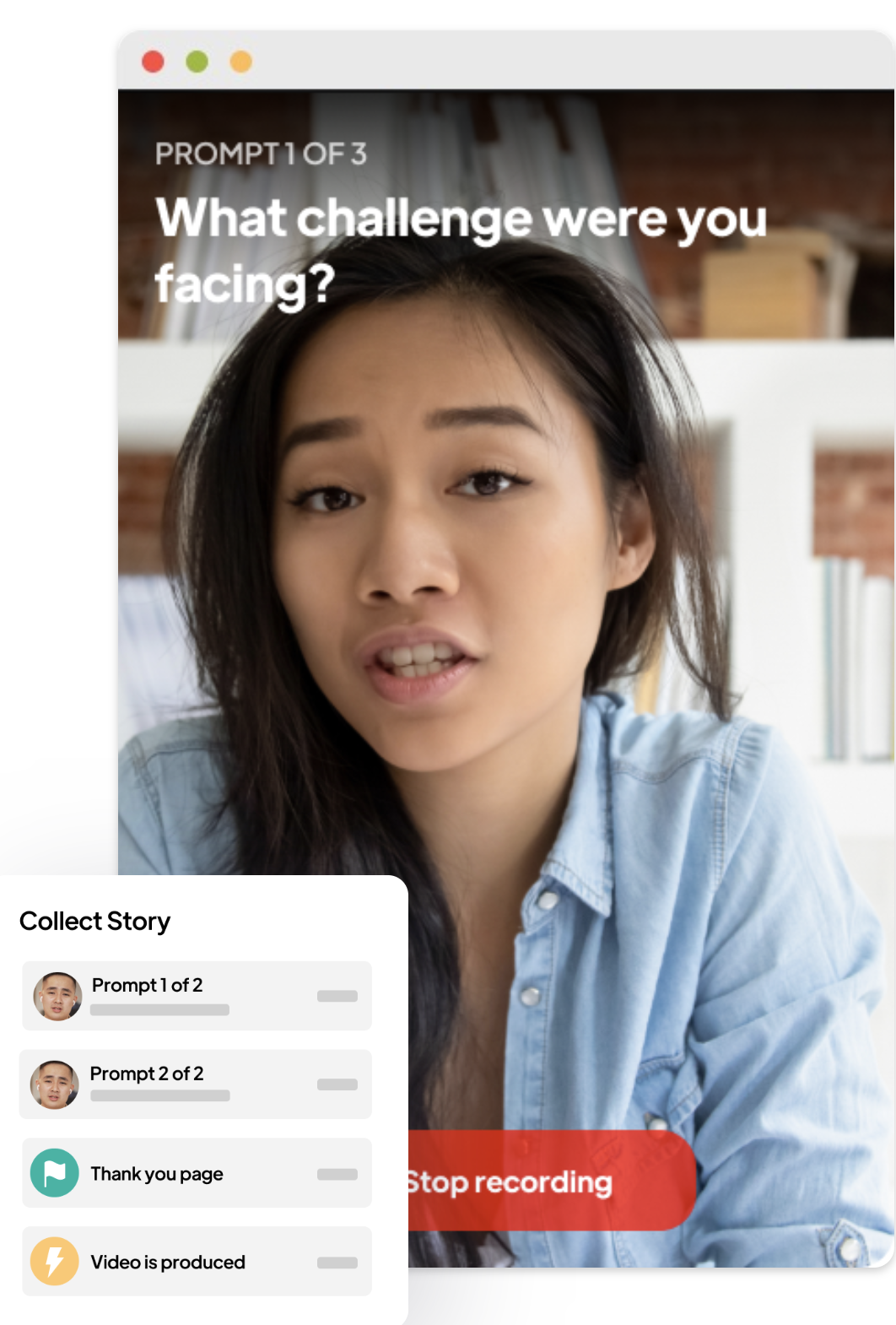
With StoryPrompt, you can create a video prompt explaining what you'd like your customer to talk about and send it to them as a simple link. They can then respond in their own time, using their phone or computer.
This is much less disruptive than asking someone to find an hour in their calendar for an interview, and it means your customers don't have to coordinate their schedule with yours.
Show Customers Why Their Story Matters
Even your happiest customers may feel uncomfortable when you ask them to record themselves on camera. They're not professional presenters, after all.
The best thing you can do is explain why you're asking. Tell them what their story means to your business and, more importantly, how it could help other people who are facing the same problem.
You can also make the process less intimidating by giving them some guidance. Instead of simply saying, "Tell us what you think about our product," try asking questions such as:
What problem were you trying to solve?
What made you look for a solution?
Why did you choose us?
What was the biggest difference after using the product?
What would you say to someone considering trying it?
These questions give customers somewhere to start without telling them exactly what to say. The goal isn't to create a perfectly scripted advertisement. It's to help someone tell their own story.
Make the Process Simple
The easier you make the process, the more likely customers are to actually complete it.
If someone has to download an app, create an account, find a password, learn how to use unfamiliar software and then upload a video file, you've given them plenty of opportunities to give up.
Ideally, they should be able to click a link and start recording. It's also worth remembering that a video testimonial can give you more than just a video. You can use the customer's words as written content, pull out shorter clips for social media and use snippets of their feedback throughout your website.
So when you collect one good video testimonial, you may actually be creating several different pieces of marketing content.
How to Produce Customer Testimonial Videos
Once you've found customers who are willing to share their experiences, the next step is producing the videos.
The good news is that you don't necessarily need a professional videographer. The most important thing is having a good story and making sure the finished video is easy to watch.
1. Give the Testimonial a Structure
You don't want to write the customer's testimonial for them, but giving them a basic structure can make a huge difference.
A simple framework is:
The problem: What were they struggling with before they found your product or service?
The solution: Why did they decide to try your product? What alternatives did they consider?
The result: What changed after they started using it?
This structure works because it gives the testimonial a beginning, middle and end without making it sound scripted.
2. Prepare Questions and Prompts in Advance
Most customers aren't professional presenters. Some will be completely comfortable talking to a camera, while others will stare at the screen for ten seconds and suddenly forget every single thing they've ever thought about your company.
That's normal.
Give them a few questions or prompts before they record so they have time to think about their answers. Some useful questions include:
What problem were you trying to solve?
How did you first hear about us?
What made you decide to give us a try?
Did you have any concerns before buying?
What has changed since you started using our product or service?
What result has surprised you the most?
What do you like most about the product?
How has your experience been with our team?
Would you recommend us to someone else? Why?
Is there anything else you'd like people to know?
You don't have to use every question. In fact, shorter testimonials will often be more effective. Pick the questions that will help your customer tell the most interesting story.
3. Don't Obsess Over Perfect Equipment
Good picture and sound quality are important, but that doesn't mean your customers need a professional camera and studio microphone.
Most modern smartphones can produce perfectly good video for a testimonial. Ask customers to find somewhere reasonably quiet, face a window or another good source of natural light, and make sure their face is clearly visible. You don't need to create a television commercial, but quality still matters. Wyzowl's 2026 research found that 89% of consumers say video quality affects their trust in a brand. Wyzowl's 2026 video marketing statistics.
Sound is particularly important. A beautifully shot video that you can't hear properly isn't going to help anyone.
The biggest priority should be making the customer feel comfortable. A slightly imperfect but genuine testimonial is often more convincing than something that looks like a corporate ad.
How to Edit Video Testimonials
Once you've collected your videos, you'll probably have more footage than you actually need. That's a good thing.
The aim of editing isn't to change what the customer said. It's to find the strongest parts of their story and remove the unnecessary bits.
Look for moments where the customer clearly explains the problem they had, describes why they chose your product, gives a specific result, shows genuine enthusiasm or says something that another potential customer will relate to.
Keep the final video focused. A potential customer doesn't necessarily need to hear every detail of a 20-minute conversation. They need the part of the story that's most relevant to them.
It's also worth adding captions. Many people watch videos without sound, particularly on social media. You can also add the customer's name, job title and company where appropriate, along with your branding.
If you don't want to spend hours editing every testimonial yourself, video testimonial software can simplify the process. Depending on the platform, you may be able to collect responses, organize your footage, create shorter clips and prepare testimonials for different channels from the same customer recording.
The basic process is simple:
Create your testimonial prompt.
Send the link to your customer.
Your customer records their response.
Turn the response into a finished testimonial.
Publish it wherever your potential customers will see it.
Where to Publish Customer Testimonial Videos
Creating a great testimonial is only half the job. You also need to make sure potential customers actually see it.
There are plenty of places where you can use customer videos, depending on where your audience spends their time.
Your Website
Your website should probably be one of the first places you use your testimonials.
You can add customer videos to your homepage, product pages, pricing page or dedicated case study pages. Think about where someone might have doubts about buying from you and put a relevant testimonial there.
For example, if customers often worry that your product is difficult to use, show a customer explaining how quickly they got started. If price is a common objection, use a testimonial that talks about the value or return they received.
The testimonial should answer the question that's already in the customer's head.
You can also create a dedicated testimonial or "Wall of Love" page.
Social Media
Video testimonials are also perfect for social media.
You can cut longer testimonials into shorter clips and share them across platforms such as LinkedIn, Instagram, TikTok or Facebook, depending on where your audience is.
Don't feel as though you need to post the entire testimonial every time. One particularly useful quote or 20-second clip can be enough to stop someone scrolling.
For B2B businesses, LinkedIn can be particularly useful because potential customers can see real people talking about their experiences with your company.
Case Studies
A video testimonial can also work alongside a longer written case study.
The written case study can provide the detail, while the video gives the story a human face. This combination can be particularly powerful for more expensive or complicated purchases where potential customers want to understand both the numbers and the experience behind them.
Video Platforms
You can also publish them on video platforms such as YouTube and then embed them elsewhere. This gives potential customers another way to discover your customer stories while making the videos easier to share across your marketing channels.
Third-Party Review Sites
Just make sure you follow the rules of each review platform, particularly around soliciting or incentivizing customer feedback.
Sales and Prospecting
Don't forget about your sales team.
A relevant customer video can be incredibly useful during the sales process. If a prospect is considering your product but hasn't quite made a decision, sending them a short testimonial from someone with a similar business or problem can provide the extra reassurance they need.
The key is relevance. Don't send a generic testimonial simply because you have one available. Find a customer story that matches the prospect's situation as closely as possible.
Email
Customer stories can also be a great addition to email marketing. You could feature a different customer testimonial in your newsletter or include a short video in an email campaign aimed at people who are considering your product.
Again, the testimonial doesn't have to be long. A short clip showing how another customer solved a problem can be enough to get someone's attention.
Events and Presentations
Finally, consider using your customer videos during webinars, presentations, conferences and other events.
Rather than simply telling an audience how good your product is, show them someone who has actually used it. A short customer video can break up a presentation and give your claims some much-needed context.
Just remember that the testimonial should feel like useful evidence rather than a five-minute advertisement.
Wrapping Up
Video testimonials aren't a replacement for every other form of marketing, but they can be one of the most convincing ways to show potential customers what your business is actually like.
The most effective testimonials aren't necessarily the ones with the best cameras, biggest budgets or most impressive editing. They're the ones where a real customer tells a genuine story.
If you're getting started, focus on finding your happiest customers, asking them at the right moment and making the recording process as simple as possible.
When choosing video testimonial software, ask yourself:
Is it easy for my customers to use?
Do they need to download anything?
Can they record from their phone or computer?
Can I guide customers with video or written prompts?
Will the finished testimonial look professional?
Do I need to edit everything myself?
Can I easily share the finished videos on my website and social media?
Can I turn one customer response into multiple pieces of content?
Your customers already have stories to tell. You just need to give them an easy way to tell them.
Agnee Ghosh
Agnee is a freelance journalist based in Kolkata, India. Her work has been published in BBC, NPR, Women’s Media Center, South China Morning Post, The Globe and Mail among others.


.jpg)






.jpg)